WHY SARGASSUM IS A PUBLIC HEALTH ISSUE
Sargassum seaweed isn’t just a hazard for the oceans—it’s a growing public health crisis affecting coastal communities across the Caribbean.
Hydrogen Sulfide (H2S)
As sargassum decomposes on beaches and in coastal waters, it releases hydrogen sulfide (H2S), a toxic gas with a characteristic rotten egg smell. Even at low concentrations, H2S can cause headaches, dizziness, nausea, and eye irritation. At higher levels, it poses serious risks to the respiratory and nervous systems, particularly for children, the elderly, and those with pre-existing conditions.
Ammonia
Decomposing sargassum also releases ammonia, which irritates the respiratory tract and can worsen asthma and other lung conditions. Communities living near heavily affected beaches often report persistent respiratory symptoms during peak sargassum season.

Bacteria and Pathogens
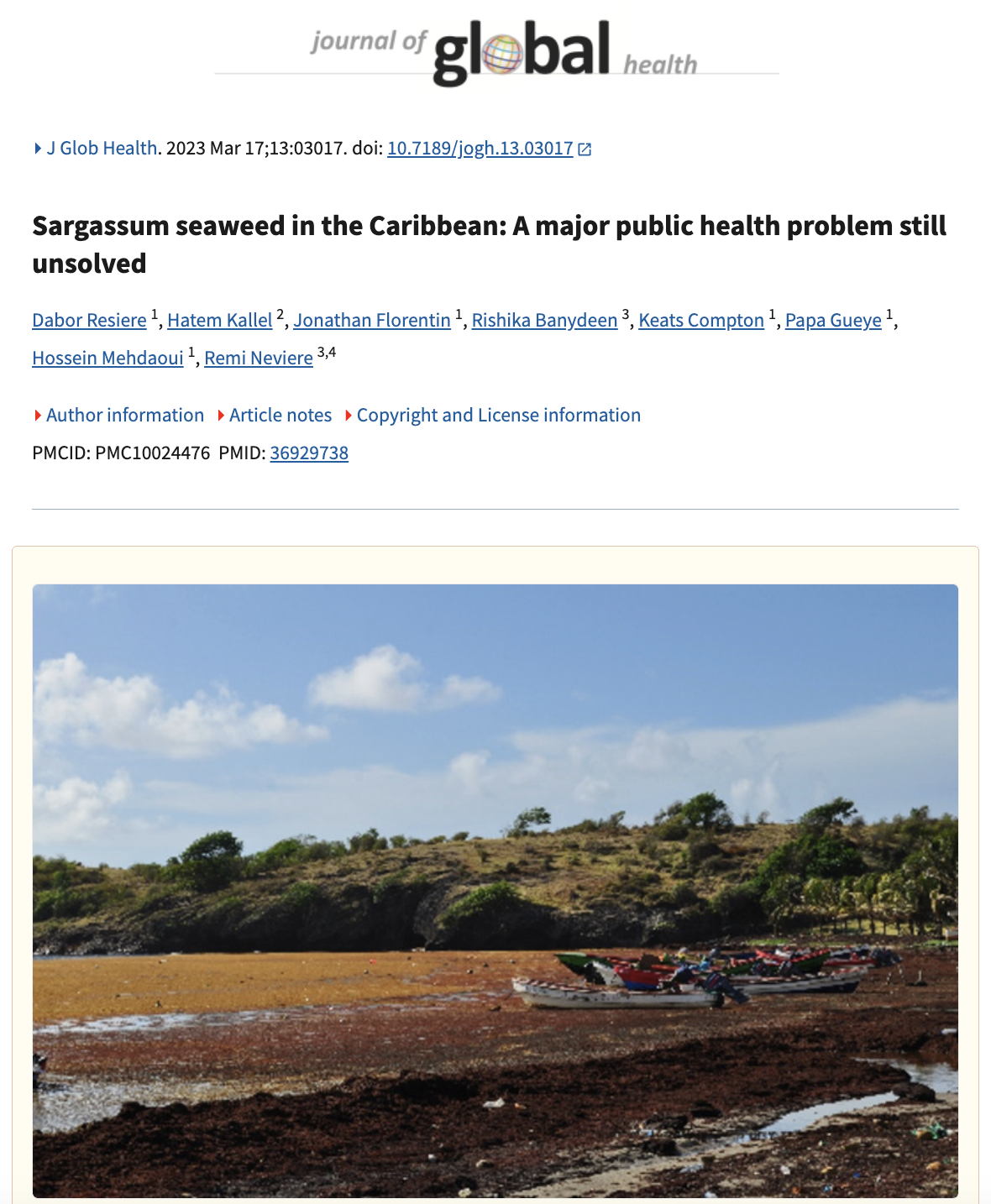
Mass sargassum accumulations create warm, stagnant conditions ideal for bacterial growth. These blooms can harbor harmful pathogens, increasing risks of skin infections and gastrointestinal illness for swimmers and beachgoers.
Heavy Metals
Sargassum naturally absorbs heavy metals including arsenic, cadmium, and lead from seawater. While the seaweed itself poses limited risk when fresh, decomposing mats can release these toxins into coastal sediments and water, raising concerns about long-term environmental contamination and food chain impacts in fishing communities.